




Why Building a Valorant Team Feels Exactly Like Assembling a D&D Party
In D&D, assigning roles like tank or support isn’t the whole story. After setting up characters, players talk about who handles combat, who moves the action, and who might take a risky step that changes everything. Also, that kind of discussion builds teamwork. It’s

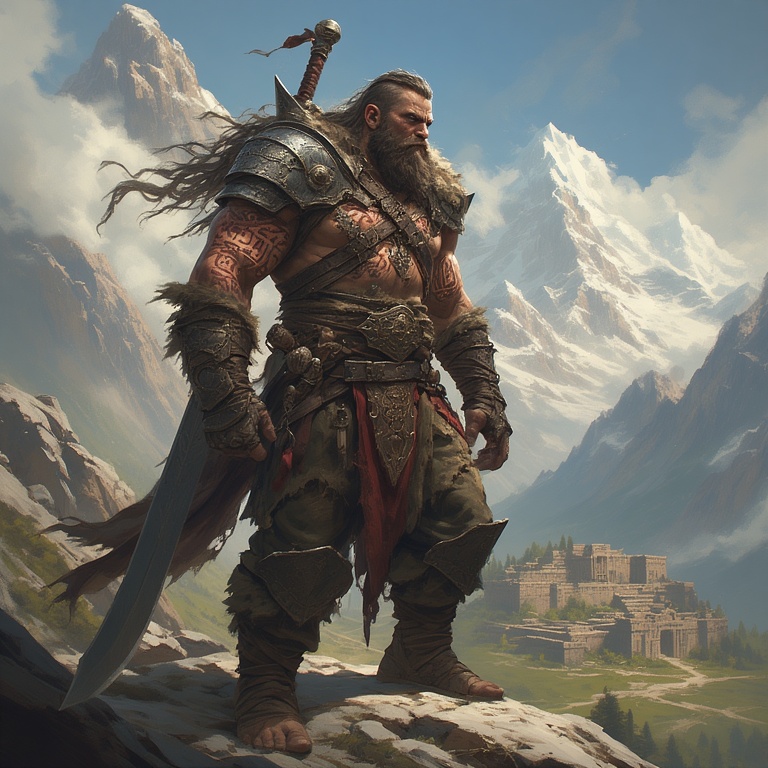
Agnetha Armbreaker from the Scarlet Sisterhood is an Path of the Totem Eagle barbarian and she’s been doing all right for herself and the party! Click the image above to check out the playlist of live gameplays on the Nerdarchy YouTube channel.
not just about duties; it’s about making sure each character fits into the group plan. Everyone ends up shaping how the adventure unfolds together.
Valorant looks unlike typical fantasy adventures or dungeon runs. It’s fast and focused on exact shooting, not magic or dice. But beneath its sci-fi surface, a familiar idea shows up: team coordination. A good Valorant team works much like picking characters in D&D. Each role fits together naturally, and victory comes from how well they work as a group.
Each Agent Role Matches a D&D Class Archetype
That is a very obvious reason that makes Valorant similar to D&D; the game’s four agent roles coincide very well with the archetype of a classic tabletop party.
- Duelists – Rogues and Barbarians
Duelists are the high-risk takers that stay in the front lines. They easily and daringly move forward, try to make the first kills, and are really good when they get on a roll.
Characters like Jett and Reyna are ready for a straightforward fight. They are independent, require good mechanical skills from the player, and can often be seen as heroes in the highlight videos. This is the usual behavior of a rogue or a barbarian.
These are the type of characters who impulsively jump into a dungeon, take the lead of exploring by themselves, and walk into a perilous area before the rest of the party has even agreed on the plan. Good play would make them the heroes, while a bad one would turn them into cautionary tales everybody remembers.
Initiators Are the Wizards
Initiators are the ones who gather the information and make the rest of the team ready to act.
Agents like Sova and Fade focus on exposing enemy positions and breaking opponent setups, giving the team the opportunity to push in a coordinated manner. That’s essentially some wizard-like reasoning.
Just as a divination spell or a battlefield control effect timely cast can decide the outcome of an encounter, Initiators like that can settle a fight even before two parties physically engage. Their contributions may not always be spectacularly reflected in the score, but seasoned players can tell that they are quite often the reason behind the success of the team.
Just like in D&D, it is often the case that brains and making the right moves/preparations count more than fighting one’s way through.
Controllers Think Like Dungeon Masters
Controllers change the fighting area so that suits them. Characters like Brimstone and Omen use their smokes and blinds or tools for area denial to decide locations of combat and lead enemies into making wrong choices. It can be easily compared to the designing of encounters in gameplay on a table.
An experienced dungeon master plans puzzles and places traps, the use of time and space in the game to indirectly influence player decisions. Controllers do it immediately. They are not just responding to the fighting, they are setting the rules of the fight.
For those players who prefer the strategic aspect of controlling the flow of a fight rather than accuracy in shooting, Controllers provide the same pleasure as a well-thought-out game wall behind the DM screen.
Unlocking Agents Is Like Finding Your Character Class
Finding out the type of player you truly are might be one of the greatest aspects of D&D. Maybe you would have had loads of fun as a brave fighter, but in the end, you realized that your biggest weapon is the artful control of the battlefield as a bard or a wizard. Valorant also offers a similar discovery experience.
Playing with different agents, players can discover which role resonates with their natural instincts and style of play. Increasing your agent roster is essential for trying out new roles, and those who are ready to fully immerse themselves can buy a Valorant prepaid card from Eneba, a website where one can purchase games and game items, to obtain Valorant Points rapidly, and because of this, unlock agents and cosmetics as they construct their dream team composition.
Finding the “main” feels much like picking a favorite class. Once people know it, everything shifts.
Sentinels Are a Party’s Defensive Backbone

In every epic D&D journey, there is always a person who ensures the survival of everyone else till the end of the adventure. This is the Sentinel type of person.
Operatives like Killjoy and Cypher turn their attention toward defense, information security, and protection of the flanks. You may compare them to clerics or paladins who have a tactical paranoia trait.
They get ready, shield and chastise an overconfident attitude. Usually, it is not their intent to be heroes, but it is their presence that quietly supports the entire team.
In a way, just as support players in tabletop games, they too go unrecognized most of the time until they vanish.
Team Synergy Beats Individual Power
You can ask any experienced dungeon master what makes a great party, and they might not say it is “the most powerful characters.” It really doesn’t matter how strong a character is, if the group cannot work together.
You may have a party which is full of glass-cannon damage dealers, and it will be quite impressive if you just look at it on paper. Though, without healing, crowd control, or defense, they will fall apart when the situation becomes difficult.
Valorant is a good example that follows this line of thought.
A team of five Duelists with large individual skill can be defeated by a balanced team that have different roles covered and excellent communication.
Why? It is because synergy beats individual power.
One Controller’s smoke makes another Initiator’s area of effect recon possible. That recon aids a Duelist’s attack. A Sentinel places the flank under a lock while the rest of the team is engaged in securing objectives.
This sequence is very much like the best D&D combat scenes, when each role makes a contribution to the overall plan. Not about who gets all the attention. It is about how well everyone has been put together.
The Experience of Making Tactical Improvisations Is Just Like Game Session Play
You cannot plan any D&D game properly once you really get face to face with the DM.
The group takes twenty minutes to devise a grand plan, but one failed dice roll can completely change the course of the game as players have to improvise from then on. Such a situation also applies to Valorant.
If the enemy team manages to counter your setup successfully, then it can mean the whole point that you were working on just falling apart. Now, all players have to change, communicate and find solutions to the problems under stress.
It is the same mental exercise that tabletop players do in each session:
- Making sense of partial information
- Figuring out opponent’s moves
- Getting together in a stressful situation
- Changing a plan on the spot
The tactical adaptability that D&D players develop translates naturally to Valorant, where the same habits of anticipating and adapting prove just as effective.
Though the setting is futuristic, the decision-making draws on the same strategy that tabletop players have long used.
Conclusion
Dungeons & Dragons and Valorant seem like very different things on the surface. One is a fantasy role-playing game where players gather around a table. The other is a fast-paced, competitive shooter in which two teams of five battle through multiple rounds.
Actually though, at the core, both are about one and the same thing: working together by each person doing what they are best at.
Both give benefits to the players who know their role well, rely on their teammates, are able to change tactics when the situation gets tough, and do their part to a bigger cause than themselves.
This is why forming a Valorant team is really similar to creating a D&D party. Despite the differences in sight, both games are basically trying to figure out: How can one use different abilities to create something that cannot be defeated?
Tabletop players who have never thought about going on to play Valorant may be quite amazed by the answer. It is not that you are learning an entirely new language of strategy. It is just that you are starting a new game in a very different environment.


No Comments